
Looking for private therapy? Discover St Andrew's Private Therapy Clinic

The rehabilitation gap: why recovery needs to go beyond clinical stability

Drawing on the experience of Tiptree's multidisciplinary team, this article explores why rehabilitation is an important part of the journey between clinical stability and greater independence.

For many people receiving specialist mental health care, achieving clinical stability is an important milestone. But being well enough to leave hospital does not always mean being ready to manage life beyond it.

Patients may still need to develop the confidence, practical skills and resilience to manage everyday life, while also managing their mental health and individual risks.

This is where specialist rehabilitation can play an important role.

When being ready for discharge means more than being clinically stable

Moving into the community can involve managing medication, cooking, personal care, finances, appointments, relationships and daily routines.

For someone who has spent a long period in hospital, these activities may not have been part of their routine for some time.

The question therefore becomes not simply “Is this person clinically stable?” but:

“How can they be supported to develop the skills and confidence to safely take their next step?”

Specialist rehabilitation provides an environment where these skills can be developed progressively, with support adjusted as independence increases.

Why the next stage matters

Discharge is not simply about finding the next available placement. The next stage needs to build on progress already made and provide opportunities to develop the skills and confidence needed for what comes afterwards.

Without opportunities to practise and demonstrate greater independence, someone can remain clinically stable but lack the evidence or confidence needed to move forward.

As Dr Sam Dove, Consultant Psychiatrist at St Andrew’s Healthcare in Essex, explains:

“The main focus for those getting out of hospital is to make sure they’re not coming back into hospital because quite a few have been revolving door patients.”

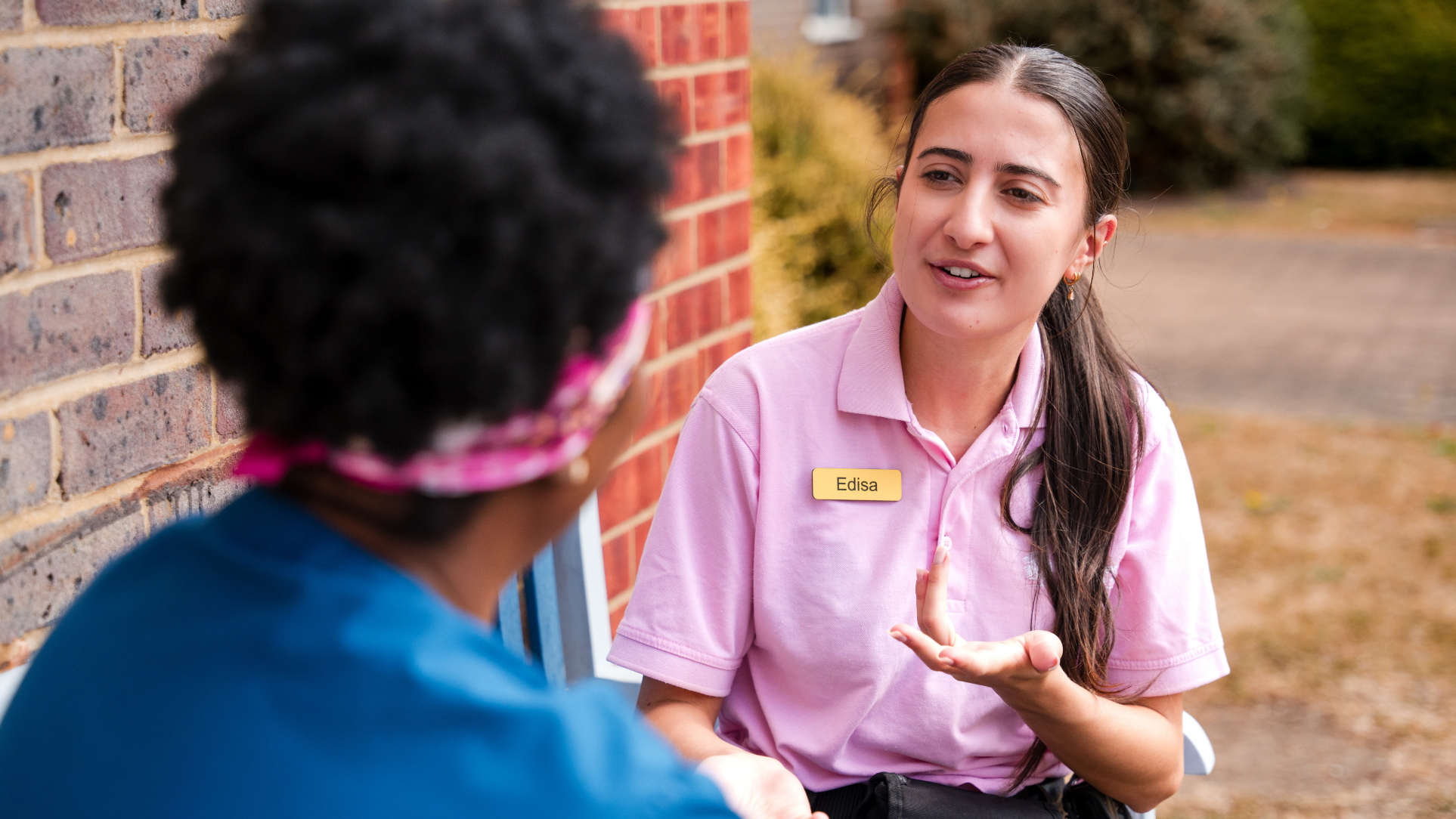
Why the next stage matters

Dr Sam Dove, Consultant Psychiatrist, explains why sustainable progression beyond hospital is so important.

Read the article, click here

Specialist rehabilitation can provide a bridge between hospital and community living, creating opportunities to develop skills, test increasing independence and understand what support may be needed next.

The aim is not simply to move someone on, but to help them make a sustainable move to the right next stage of care.

Testing progress in a safe environment

At our Tiptree service, rehabilitation for complex mental health needs can involve everyday activities such as preparing food, managing money, using public transport, accessing the community, developing healthier routines and taking part in meaningful activities.

For people with forensic histories or higher levels of risk, progression needs to be carefully planned. A secure environment, relational security and forensic expertise, as provided on Tiptree ward, provide opportunities to understand and test risk progressively, rather than assuming that stability in a hospital will automatically translate to community living.

This can provide valuable evidence for patients, clinical teams and those planning the next stage of care, especially when moving from secure mental health services into the community.

Rehabilitation is a team effort

Effective mental health rehabilitation extends beyond any one discipline.

At Tiptree, Occupational Therapy works alongside Physical Health Nurses, Sport and Exercise, Psychology, Social Work, nursing and medical colleagues to support the whole person.

Progress might mean improving physical health and mobility, developing healthier routines or overcoming anxiety and sensory barriers to community access.

These changes may appear small, but they can be important steps towards greater independence.

Making recovery visible

Progress is not always captured by clinical measures alone.

At Tiptree, the Creative Ability model helps the team understand how patients engage with activities and respond to different levels of support, providing a broader picture of changes in functioning, participation and confidence.

Patient experiences bring this progress to life.

One Tiptree patient has moved from significant anxiety and sensory barriers towards greater confidence and independence. Another has become a HEALS (Healthy Eating and Life Support) Ambassador, using their experience to support others.

Their journeys are very different but demonstrate the same principle that progress is often built through a series of achievable steps.

Closing the rehabilitation gap

The rehabilitation gap is the space between being stable enough to leave hospital and being ready to live as independently and safely as possible.

Closing that gap requires time, specialist expertise and opportunities to practise the skills needed for life beyond hospital.

For some people, this may mean intensive rehabilitation over a relatively short period. For others, progress may take longer and focus on personal life skills, confidence and quality of life.

The goal remains the same: helping each person make meaningful progress towards the most appropriate next stage of their care.

Recovery for people with complex mental health needs is not just about being well enough to leave hospital. It is about being ready for what comes next.

Make a referral

Call us: 0808 258 4261

Email: sah.admissions@nhs.net

Tiptree Specialist Rehabilitation
St Andrew's Healthcare Essex

Find out more

Who we are

We are a charity supporting those with complex mental health needs.

Our services

Find the information you need to make informed referrals and explore our specialist services – together, we deliver life-changing care.

Contact us

Our team are here to help you with your enquiry.