Recovery is more than symptom reduction: preparing people for life beyond hospital
Clinical stability is an important milestone in mental health recovery, but it does not always mean someone is ready to live successfully in the community. In this article, Annymn Adams, Lead Occupational Therapist at St Andrew’s Healthcare Essex, explores how specialist Occupational Therapy can help patients rebuild confidence, independence and everyday skills through meaningful occupation. Drawing on the Model of Creative Ability and examples from our Tiptree ward in Essex, she considers how activities such as horticulture, vocational occupation and education programmes can turn rehabilitation into measurable, purposeful progress for life following hospital care.
One of the biggest misconceptions about mental health rehabilitation is that once someone's symptoms have stabilised, they are ready to leave hospital.
In reality, clinical stability is often just the beginning.
As part of the multidisciplinary team, many of the people we support at Tiptree ward, our specialist male rehabilitation service in Essex, have spent long periods of time in hospital. They may no longer require secure care or acute treatment, but everyday life can still feel overwhelming. Simple tasks such as travelling independently, shopping, maintaining a routine or managing relationships may feel out of reach.
As Occupational Therapists, our role is to help people rebuild these skills, confidence and routines so they are prepared not just to leave hospital, but to thrive beyond it.
A journey back to everyday life
One patient I worked with (shared with permission and identifying details changed) arrived at Tiptree after several admissions to secure and acute services.
Although his mental health had stabilised, he experienced significant anxiety whenever he left the ward. Everyday activities that many of us take for granted, such as visiting a local shop or travelling in the community, felt overwhelming.
Rather than expecting immediate independence, we broke these goals into manageable steps.
Initially, this involved identifying his sensory processing needs and providing access to sensory integration-informed therapeutic environments and interventions. These helped him to understand his sensory needs and develop coping strategies to support emotional regulation in stressful situations.
From there, we introduced carefully planned and graded occupational activities, giving him opportunities to apply these strategies and develop a greater sense of mastery and agency.
He progressed from supported walks within the hospital grounds to visits into the local community, eventually shopping independently with more autonomy and confidence, while traveling became significantly less stressful. The biggest impact of this was him attending appointments off site, such as the dentist and being more open to trying new things.
One of the proudest moments for the team came when he said that for the first time in many years, he believed he could live successfully outside hospital.
That progress wasn't achieved through one intervention. It was the result of hundreds of small, meaningful experiences that gradually rebuilt confidence.
Recovery happens through doing
Occupational Therapy is based on the belief that people recover through meaningful occupation and connection.
Talking therapies, medication and nursing care all play essential roles in recovery, but confidence develops through experience, achieving a sense of mastery and belonging.
People regain confidence and autonomy by preparing meals, managing routines, using public transport, developing hobbies, reconnecting with others and participating in their communities.
These are the occupations that create identity, purpose and belonging.
Our role is to create opportunities for patients to practise these activities safely while providing the right level of support as they develop.
Meeting people where they are
Every patient arrives with different strengths, challenges and aspirations.
At Tiptree ward, Occupational Therapy practice is guided by the Model of Creative Ability (VdT MoCA), which helps us understand a person's current level of motivation and occupational functioning through their observed participation in everyday activities.
In a high-needs rehabilitation setting, the Model of Creative Ability enables us to match therapeutic activities, support, and environmental demands to what a person can manage at that point in their recovery.
Rather than expecting individuals to achieve too much too quickly, interventions are carefully graded to provide achievable challenges that promote confidence, engagement, and independence.
As motivation and functional ability develop, the level of challenge is increased accordingly.
This approach informs intervention planning, risk management, and recovery pathways, while ensuring patients experience a sense of mastery and success at every stage.
Progress is measured using the Activity Participation Outcome Measure (APOM), allowing us to demonstrate meaningful changes in occupational participation and functioning over time.
Rehabilitation beyond the therapy room
Some of the most important therapy happens outside formal sessions.
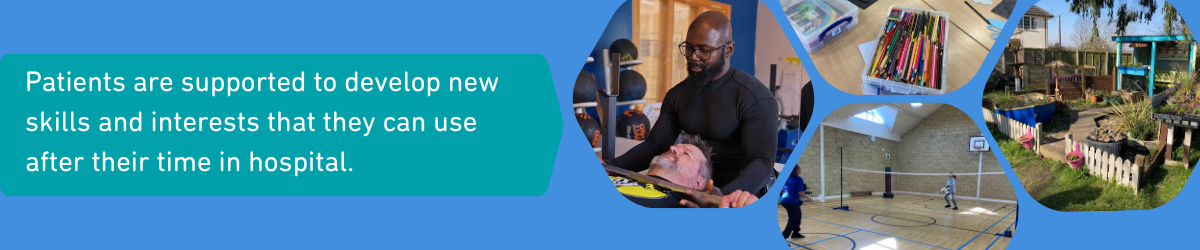
Patients may develop confidence through our award-winning horticultural Green Gym, learning responsibility, teamwork and practical skills while improving wellbeing through nature-based activity.
Others discover new interests through our partnership with New Life Wood, where woodworking and conservation projects provide opportunities to build routine, vocational skills and confidence.
Some go on to become HEALS Ambassadors (part of our bespoke 12-week Healthy Eating and Life Support programme), using their own lived experience to support others, contribute to service development and rediscover a sense of purpose.
Although these activities are very different, they all share the same goal, helping people build the confidence and practical skills needed for successful lives in the community.
Measuring what matters
Successful rehabilitation is about far more than symptom reduction.
We look for changes in motivation, engagement, social interactions, mastery and participation in everyday life.
These are often the factors that determine whether someone can sustain recovery after discharge.
By understanding what is most important to people and what they require after hospital care, we can provide patients, families and commissioners with greater confidence of what the next steps should be in their recovery journey.
Looking beyond discharge
Every patient leaves Tiptree ward with a different destination and different ambitions.
Our job is not to decide what recovery should look like.
It is to help each person build the confidence, skills and appropriate support structures to achieve it.
For me, that is what Occupational Therapy is really about.
Not simply helping people recover from illness.
Helping them rediscover everyday life.
Considering a referral?
If you would like to discuss whether Tiptree ward could support one of your patients, our team would be happy to help.
Call us on 0800 434 6690 or email sah.admissions@nhs.net